
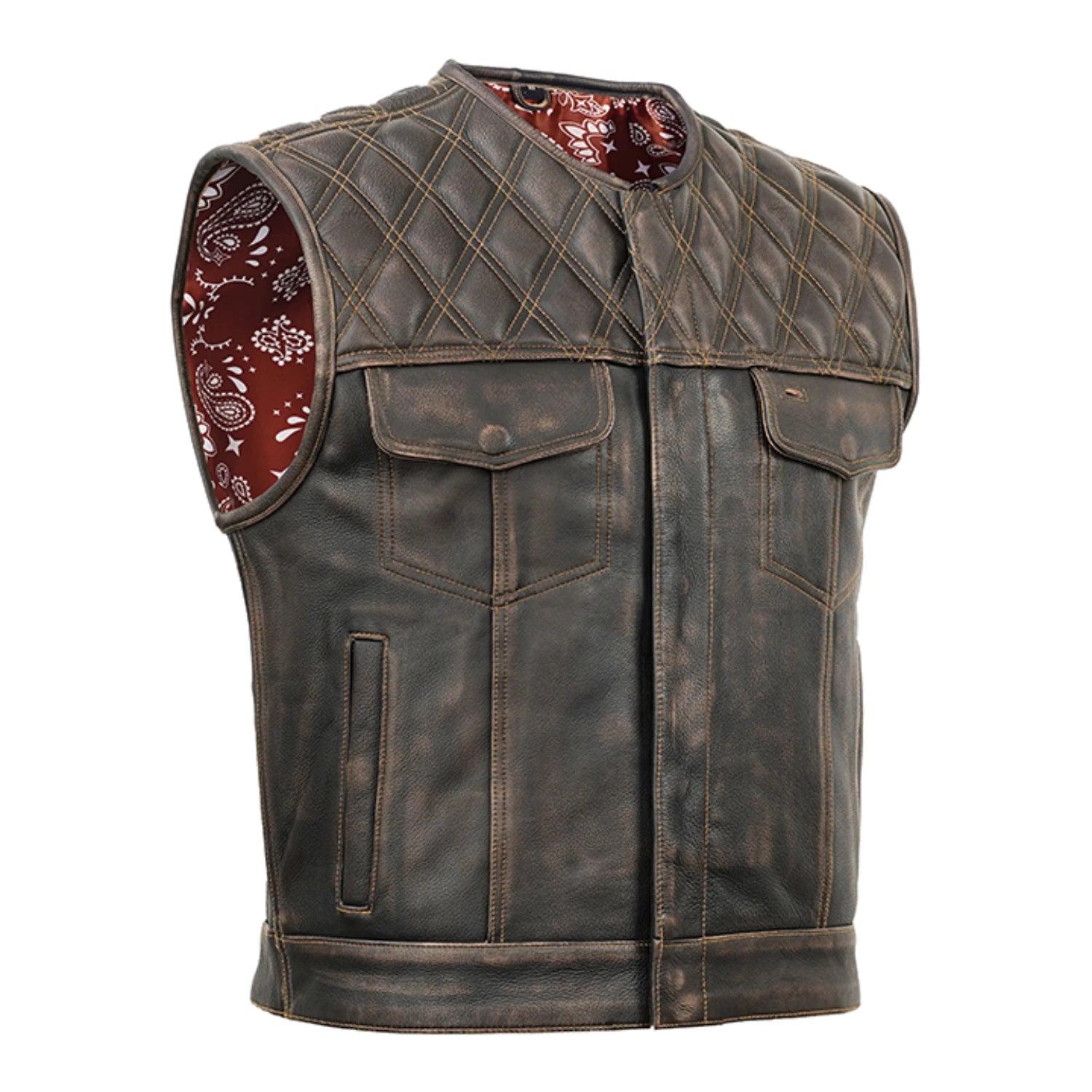
A mens leather motorcycle vest is a core component of motorcycle riding apparel within the Motorcycle Apparel & Protective Gear industry, particularly in regions like Baltimore, USA where riders frequently encounter variable weather, road debris, and long-distance riding conditions. A properly maintained vest not only preserves its visual appeal but also ensures structural integrity, comfort, and long-term durability.
Maintenance of a biker vest is not merely cosmetic; it directly impacts material performance, resistance to cracking, flexibility, and safety during rides. Leather, being a natural material, responds to environmental stressors such as humidity, UV exposure, sweat, and pollutants. This article provides a comprehensive, expert-level breakdown of how to maintain a leather motorcycle vest for long-term use based on established industry practices and material science principles.
Understanding the Material Composition of a Mens Leather Motorcycle Vest
Leather used in motorcycle vests is typically full-grain or top-grain cowhide due to its balance of durability and flexibility. These materials retain natural fibers, which allows them to age well if properly maintained.
Full-grain leather develops a patina over time, which enhances appearance, while top-grain leather is slightly processed for smoother texture. Both types require consistent care to prevent dehydration and fiber breakdown.
Environmental exposure—especially from UV rays and moisture—can weaken collagen fibers in leather. This is why maintenance routines are essential in ensuring longevity and performance consistency.
Importance of Regular Maintenance in Motorcycle Gear Longevity
A mens leather motorcycle vest is exposed to constant friction, sweat absorption, and environmental contaminants during rides. Without routine care, leather can:
- Dry out and crack due to loss of natural oils
- Stiffen, reducing riding comfort and flexibility
- Develop mold or odor from trapped moisture
- Lose structural integrity over time
Industry studies on leather preservation indicate that conditioned leather can last significantly longer than untreated leather, often extending usable life by several years under consistent care practices.
Cleaning Practices for a Biker Vest
Proper cleaning is the foundation of leather maintenance. However, cleaning must be controlled and non-abrasive.
Surface Cleaning Method
A soft microfiber cloth should be used to remove dust and debris after each ride. For deeper cleaning, a damp cloth with a mild leather-safe cleaner is recommended. Harsh detergents are avoided because they strip essential oils.
Deep Cleaning Considerations
Deep cleaning should be done sparingly—typically every few months depending on usage frequency. Excessive washing weakens leather fibers and reduces lifespan.
Leather cleaning is not about saturation but controlled surface treatment that preserves natural oils while removing contaminants.
Conditioning and Moisture Balance
Leather conditioning is a critical step in maintaining flexibility and preventing cracking. Conditioners replenish oils lost through heat and friction exposure.
A high-quality leather conditioner should be applied in thin layers and evenly distributed. Over-conditioning, however, can oversaturate pores and soften the structure excessively, which reduces protective strength.
Riders often overlook moisture balance, but maintaining equilibrium between dryness and oil content is essential for preserving a biker vest used in long rides or seasonal touring.
Proper Storage Techniques
Storage conditions significantly affect leather longevity. Improper storage is one of the most common causes of premature deterioration.
A leather motorcycle vest should be stored:
- In a cool, dry environment
- Away from direct sunlight
- On a padded or wide hanger to maintain shape
- With adequate airflow to prevent moisture buildup
Plastic covers are generally discouraged because they trap humidity, increasing the risk of mold development.
Weather Protection and Environmental Exposure
Motorcycle riders frequently expose gear to rain, sun, and road pollutants. Leather is naturally semi-porous, making it vulnerable to water damage if untreated.
Water-resistant leather treatments create a protective barrier against moisture penetration. However, they do not make leather fully waterproof. After rain exposure, natural drying at room temperature is recommended—never using direct heat sources such as hair dryers or radiators.
UV exposure is another critical factor. Over time, ultraviolet rays degrade leather pigments and fibers, making UV-protective sprays a valuable preventive measure.
Expert Insights and Industry Best Practices
Professionals in motorcycle apparel manufacturing emphasize a cyclical maintenance framework:
- Post-Ride Cleaning: Immediate removal of dust and contaminants prevents long-term surface damage.
- Scheduled Conditioning: Regular oil replenishment maintains elasticity.
- Seasonal Deep Care: Intensive inspection and treatment before peak riding seasons.
- Preventive Protection: Use of water-repellent and UV-resistant treatments.
This structured maintenance approach is widely used in the Motorcycle Apparel & Protective Gear industry because it balances material preservation with practical riding conditions, particularly in climates like Baltimore where seasonal humidity and temperature shifts are common.
For riders selecting high-quality gear, durable options such as a well-constructed mens leather motorcycle vest provide a strong foundation for long-term maintenance efficiency.
Common Mistakes and Misconceptions
Several incorrect practices reduce leather vest lifespan:
One common mistake is using household cleaning agents. These products contain chemicals that break down leather proteins. Another misconception is that frequent conditioning always improves leather health; in reality, excessive conditioning can weaken structure and reduce abrasion resistance.
Air-drying in direct sunlight or heat is also damaging, as it accelerates dehydration and surface cracking. Additionally, many riders store leather in sealed bags, which traps moisture and encourages microbial growth. Avoiding these errors is as important as applying correct maintenance techniques.
Real-World Applications in Motorcycle Riding Culture
Within motorcycle communities, especially among long-distance riders and club members, leather vest maintenance is considered part of gear discipline. A well-maintained vest is often associated with professionalism, safety awareness, and respect for riding culture.
In urban riding environments like Baltimore, where road exposure and weather variability are common, proper maintenance becomes even more critical. Riders who consistently maintain their gear report longer usability cycles and improved comfort during extended rides.
Conclusion
Maintaining a mens leather motorcycle vest is a structured process that combines cleaning, conditioning, environmental protection, and proper storage. When applied consistently, these practices significantly extend the lifespan and performance of the garment while preserving its comfort and visual integrity.
Within motorcycle culture, especially in demanding riding environments, a well-maintained biker vest represents both functional reliability and disciplined care. By following industry-established maintenance protocols and avoiding common mistakes, riders ensure that their gear remains durable, protective, and visually refined for years of use.
FAQs
What is the best way to clean a mens leather motorcycle vest?
A microfiber cloth with a mild leather cleaner is recommended. Harsh detergents should be avoided to preserve natural oils and texture.
How often should a biker vest be conditioned?
Conditioning is typically recommended every 2–3 months, depending on usage frequency and environmental exposure.
Can water damage a leather motorcycle vest?
Yes. Leather absorbs moisture, which can lead to stiffness and cracking if not dried properly and treated with protective solutions.
What happens if leather is over-conditioned?
Over-conditioning can make leather overly soft, reducing structural strength and increasing susceptibility to wear and tear.
How should a leather vest be stored during off-season?
It should be kept in a cool, dry place on a padded hanger with airflow, away from direct sunlight and humidity.
Is waterproofing necessary for motorcycle vests?
While not mandatory, water-resistant treatments help protect against rain exposure and extend material life.
How long can a well-maintained leather vest last?
With proper care, a high-quality leather vest can last many years, often exceeding a decade of regular use.
References
- Wikipedia contributors, “Leather,” Wikipedia, The Free Encyclopedia
- International Leather Maker, industry publications on leather processing and durability
- U.S. Department of Agriculture (USDA), reports on animal hide processing and material preservation standards
Leave a Reply