
Introduction
There’s something about a great cocktail dress that just works, year after year. You pull it out of the closet, put it on, and suddenly you’re ready for whatever the evening throws at you — a rooftop party, a gallery opening, a wedding reception where you’re not sure how dressed up to go.
Designer cocktail dresses solve that problem before it starts. They’re built with intention, cut to flatter real bodies, and made from fabrics that hold their shape long after fast fashion has fallen apart in the wash. This isn’t about chasing trends. It’s about understanding why certain silhouettes, textures, and details keep showing up on best-dressed lists decade after decade — and why that matters when you’re the one getting ready in the mirror tonight.
What Actually Makes a Cocktail Dress “Timeless”
People throw the word “timeless” around a lot, but it actually means something specific. A timeless piece doesn’t scream a particular year at you. You won’t look back at photos in ten years and cringe. That comes down to a few things working together: a silhouette that flatters rather than follows a fad, fabric with real weight and drape, and construction that’s meant to last through years of dry cleaning and dance floors.
Think about why the little black dress has survived nearly a century — it’s not because it’s boring, it’s because it’s endlessly adaptable. Fit-and-flare shapes, sheath dresses, and A-line cuts have stuck around because they work on a wide range of body types without needing constant reinvention.
Add in fabrics like silk, tulle, or duchesse satin, and you get pieces that photograph beautifully under any lighting, from a dim restaurant to bright afternoon sun. That combination of adaptable shape and quality material is really the whole formula. Everything else — color, embellishment, sleeve length — is just personal expression layered on top of a foundation that doesn’t go out of style.
Fabric and Craftsmanship Are Doing More Work Than You Think
Here’s something people underestimate: the fabric a dress is made from changes how it moves, how it photographs, and honestly how confident you feel wearing it. A stiff, cheap polyester will crease the second you sit down. Real silk has a natural sheen and drape that catches light in a way synthetic fabric just can’t replicate.
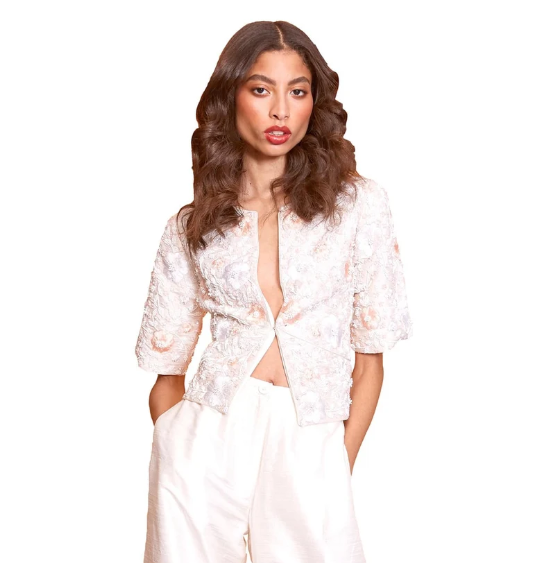
Hand-beaded tulle takes an enormous number of hours to complete, which is exactly why it looks different from anything mass-produced — every bead is placed with intention, not stamped on by machine. This is where the difference between a mall dress and a genuinely well-made piece becomes obvious the moment you touch it.
Embroidery, three-dimensional floral appliqués, fringe that moves with you on the dance floor — these details take skill, patience, and time most manufacturers aren’t willing to invest. When a dress is constructed with that level of care, it doesn’t just look better in photos. It holds up. You’re not going to see loose threads after one wear or a hem that starts unraveling by the second dry clean. That’s the quiet, unglamorous side of quality that ends up mattering the most.
Silhouettes That Have Earned Their Staying Power
Certain shapes just keep coming back, season after season, because they’re genuinely flattering rather than trendy for a moment. The fit-and-flare cocktail dress nips in at the waist and flares out gently, which works beautifully for dancing and sitting through a long dinner alike.
The sheath dress, close to the body from top to bottom, has a quiet confidence to it — it doesn’t need embellishment to make a statement, though a lot of designers add beading or embroidery anyway for that extra bit of drama. Then there’s the two-piece ensemble, which has had a real resurgence lately. A cropped top paired with a fitted or flared skirt gives you more room to mix textures and play with proportion than a single-piece dress usually allows.
Bolero jackets and cropped silk toppers serve a similar purpose — they let you layer for a more formal look, then peel off for something a little more relaxed later in the night. None of these silhouettes are new inventions. They’re refinements on shapes that have worked for decades, updated with modern fabrics and finishing techniques.
Color and Detail Without Losing the Timeless Feel
A lot of people assume “timeless” means neutral, and that’s really not true. Sapphire blue, deep burgundy, and champagne have all proven themselves as reliable as black over the years — they photograph well, they suit a wide range of skin tones, and they don’t scream a specific season the way, say, a very of-the-moment neon can.
What keeps a bold color from feeling dated is usually the craftsmanship supporting it: a rich jewel tone in real silk or hand-beaded tulle reads as elevated regardless of what year it is. Embellishment works the same way. Sequins, fringe, and hand embroidery can absolutely feel current, but the key is scale and placement rather than sheer volume.
A dress covered edge-to-edge in sequins from a fast-fashion label often looks costume-y within a couple years. The same shimmer, applied with restraint by a skilled hand, tends to age far better. Details like a keyhole neckline, tiered sleeves, or an asymmetrical hem also give a dress personality without pulling it into “trend” territory that expires by next season.
Finding the Right Fit and the Right Occasion
Cocktail attire covers more ground than people realize — everything from a semi-formal work event to a wedding reception to a milestone birthday party. The trick is matching the dress to the actual formality of the event rather than defaulting to the most dramatic option in your closet.
A heavily beaded gown-length piece might overwhelm a casual rooftop gathering, while something too simple can feel underdressed at a black-tie-adjacent affair. Reading the room, or at least the invitation, genuinely helps here. Fit matters just as much as style. A dress that’s technically your size but cut for a different body type will never look as good as one tailored to how you actually move and stand.
This is part of why made-to-order eveningwear has such a loyal following among people who attend a lot of formal events — a piece built around your specific measurements simply sits differently than something pulled off a rack. Some ateliers, including Himelhoch’s Atelier, even offer a complimentary fitting with the designer by appointment in New York City, which turns dress shopping into something closer to a genuine styling consultation than a transaction. That kind of attention is rare, and it shows in how the finished piece actually fits.
Caring for a Dress So It Lasts
Buying well-made cocktail attire is only half the equation — how you care for it determines whether it’s still wearable in five or ten years. Delicate fabrics like silk and tulle should generally go to a professional dry cleaner rather than through a home washing machine, since agitation and heat can distort beading, embroidery, and drape.
Storing pieces on padded hangers, away from direct sunlight, prevents fading and keeps embellishments from snagging on other garments. It’s a small habit, but it’s the difference between a dress that still looks sharp after a decade and one that’s visibly tired after a single season.
FAQs
What’s the difference between cocktail attire and formal evening wear?
Cocktail attire is generally shorter, often knee-length to midi, and slightly less formal than a full-length evening gown. Evening wear leans toward black-tie events, while cocktail dresses suit semi-formal parties, receptions, and dinners.
How do I know if a silhouette will flatter my body type?
Fit-and-flare and A-line shapes tend to be the most universally flattering since they define the waist while skimming rather than clinging elsewhere. Sheath styles work best on those comfortable with a closer fit throughout.
Is it worth investing in a made-to-order piece over off-the-rack?
If you attend formal events regularly, yes — a made-to-order dress is built around your exact measurements, which affects everything from how it sits at the shoulder to how it moves when you walk or sit.
How should I store a beaded or embroidered dress?
Use a padded hanger, keep it in a breathable garment bag rather than plastic, and store it away from direct light and humidity to protect the beadwork and fabric over time.
Conclusion
None of this is really about chasing what’s fashionable right now. It’s about understanding what makes a piece worth keeping — quality fabric, a flattering silhouette, craftsmanship you can feel when you touch the seams, and a fit that’s actually built for you rather than an average body type.
That’s what separates a dress you’ll wear once and forget from one that becomes a genuine wardrobe staple, pulled out for years of special occasions to come. When you know what to look for, finding it becomes a lot less overwhelming — and a lot more enjoyable.
Leave a Reply