
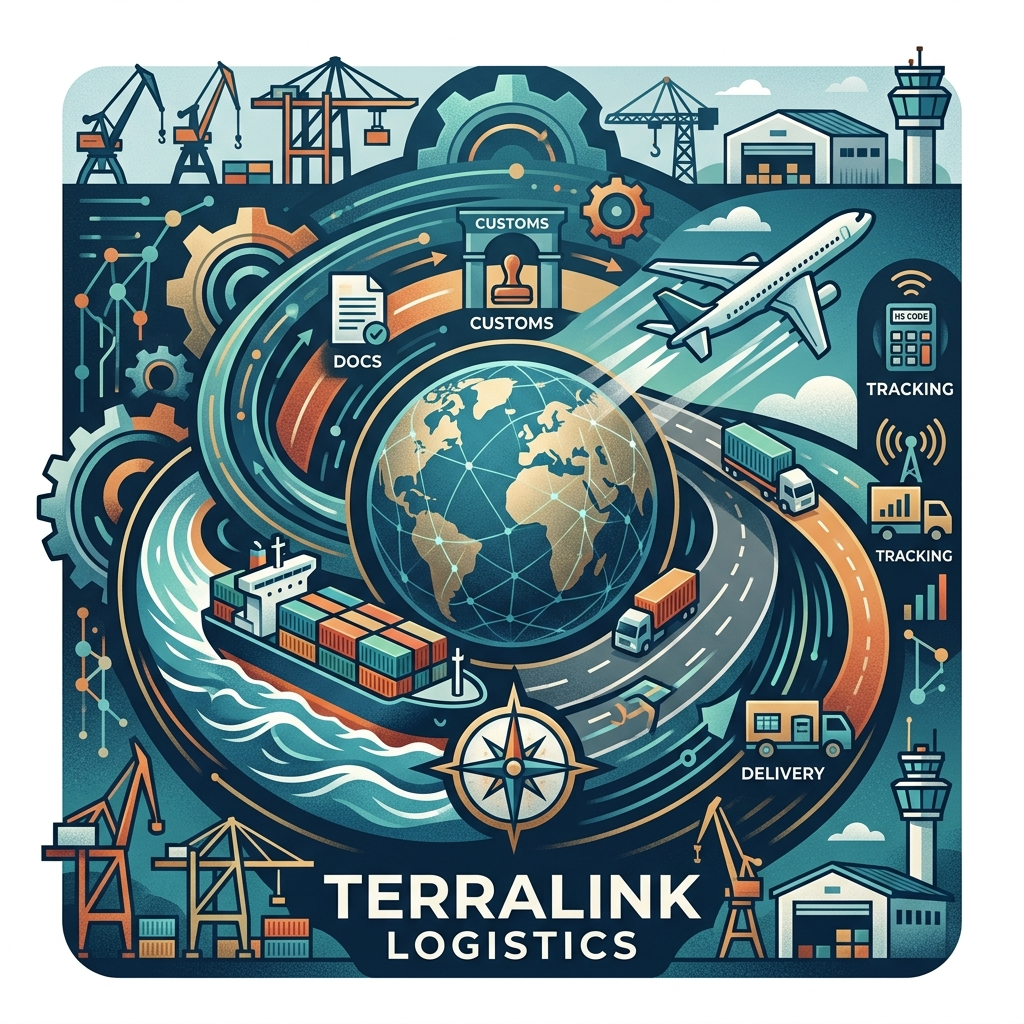
The global economy functions as a massive, interconnected web of supply chains that never sleep. At the heart of this complexity lies a critical service that ensures products move from a factory floor in one hemisphere to a retail shelf in another. While consumers often take for granted that their online orders arrive within days, the logistical journey involves a sophisticated dance of documentation, regulation, and multi-modal transport. This is the realm of international freight forwarding.
International freight forwarding is often described as the “travel agency” for cargo. However, that comparison barely scratches the surface of the responsibilities involved. A freight forwarder does not just book a “seat” for a container; they manage the legal, financial, and physical risks associated with moving goods across borders. In a world where trade regulations change overnight and port congestion can stall entire industries, understanding the mechanics of this process is essential for any business looking to scale globally.
The Foundations of Global Logistics
To understand how the system works, one must first define the core identity of the service provider. According to the technical definition provided by Wikipedia, a freight forwarder is a person or company that organizes shipments for individuals or corporations to get goods from the manufacturer or producer to a market, customer, or final point of distribution. It is important to note that forwarders typically do not move the goods themselves. Instead, they act as experts in the logistics network, leveraging contracts with carriers including trucking companies, transoceanic lines, and air cargo specialists.
The process begins with the negotiation of space. Because forwarders handle high volumes of cargo from various clients, they can secure better rates than an individual shipper could on their own. This “aggregation” model is what makes international trade accessible to small and medium-sized enterprises. Without the intermediary role of a forwarder, a small business would have to navigate the disparate systems of ocean liners and customs agencies in multiple languages and jurisdictions simultaneously.
Today, the industry is undergoing a massive digital transformation. Recent reports from Google News indicate that AI-driven route optimization and real-time tracking are no longer luxury features but standard requirements. Companies are now using predictive analytics to bypass weather disruptions and geopolitical bottlenecks. In this fast-paced environment, TerraLinkLogistics offers international freight and forwarding services that integrate these modern technologies with traditional logistical expertise to ensure cargo remains in motion.
The Step-by-Step Mechanics of a Shipment
The journey of an international shipment is generally divided into six key stages. Each stage represents a handoff of responsibility and a potential point of failure if not managed correctly.
1. Export Haulage and Outbound Documentation
The process kicks off with export haulage, which is the movement of the items from the shipper’s location to the forwarder’s warehouse or the port of exit. Before the truck even leaves the warehouse, a mountain of paperwork must be prepared. This includes the Commercial Invoice, the Packing List, and the Certificate of Origin. These documents serve as the “passport” for the goods. If a single digit is incorrect on the packing list, the shipment can be seized at the border, leading to massive fines and delays.
2. Export Customs Clearance
Before goods can leave their country of origin, they must be cleared for export by government authorities. The freight forwarder or a designated customs broker submits the necessary declarations. This step ensures that the goods are not restricted or illegal and that any applicable export duties are calculated. Professionalism at this stage is vital; as noted in Forbes, supply chain resilience is often built on the ability to navigate regulatory hurdles with precision and transparency.
3. Origin Handling and Loading
Once cleared, the goods undergo origin handling. This involves the physical inspection of the cargo, consolidation with other shipments if the client is using Less than Container Load (LCL) shipping, and the eventual loading into a shipping container. The “Bill of Lading” is issued at this stage. This is perhaps the most important document in the entire process, as it serves as a contract between the owner of the goods and the carrier, a receipt for the goods, and a document of title.
Managing the Middle: Ocean and Air Transit
The transit phase is where the forwarder’s role shifts from “preparer” to “monitor.” Depending on the urgency and budget, the forwarder will have selected either sea freight or air freight.
Sea Freight remains the backbone of global trade, carrying over 80% of the world’s goods. It is cost-effective and capable of handling massive volumes, yet it is subject to the whims of the ocean and port efficiency. A forwarder must track the vessel’s progress and stay in constant communication with the shipping line to manage “blank sailings” (cancelled stops) or port strikes.
Air Freight is the choice for high-value or perishable items. While significantly more expensive, it reduces the “door-to-door” time from weeks to days. Forwarders managing air cargo must be experts in TSA regulations and IATA standards, ensuring that every pallet is weighed and measured to the millimeter to fit within the constraints of a cargo plane’s fuselage.
During this period, the forwarder acts as the single point of truth for the client. They provide updates, manage insurance claims if a container is lost at sea, and prepare the “arrival notice” for the destination country. This phase is less about physical labor and more about information management. In the modern era, data is just as valuable as the physical cargo, and the ability to provide real-time visibility is what separates a mediocre forwarder from an elite one.
Destination Arrival and Final Delivery
The final hurdles of international forwarding occur once the ship or plane reaches the destination country. This is often where the most significant delays occur due to local bureaucracy or congested infrastructure.
Import Customs Clearance
Just as the goods had to be cleared to leave, they must be cleared to enter. The import customs clearance process can begin while the goods are still in transit. The forwarder ensures that all taxes, tariffs, and Value Added Tax (VAT) are paid. They also ensure the goods comply with local safety and environmental standards. For example, electronics must meet specific certification requirements, and food items must pass agricultural inspections.
Destination Handling and Import Haulage
After clearance, the cargo is unloaded from the container (de-consolidation) and prepared for the final leg of the journey. Import haulage is the delivery of the goods from the port to the final consignee’s warehouse. This requires coordination with local trucking fleets and often involves “last-mile” logistics, which can be surprisingly complex in dense urban areas.
Why Professional Forwarding is Essential
Many businesses mistakenly believe they can save money by managing these steps independently. However, the hidden costs of DIY logistics often far outweigh the fees of a professional. A single mistake in a Harmonized System (HS) code can result in a shipment being held for weeks, incurring daily “demurrage” fees that can reach hundreds of dollars per container.
A professional forwarder provides a “buffer” between the business and the chaos of global transport. They offer:
- Risk Mitigation: Comprehensive cargo insurance and expert packaging advice.
- Cost Efficiency: Access to negotiated bulk rates and optimized routing.
- Scalability: The ability to enter new international markets without needing to hire an in-house logistics team.
In the current global climate, where supply chains are increasingly volatile, having a partner who understands the nuances of different regions is a competitive advantage. TerraLinkLogistics offers international freight and forwarding services that prioritize transparency and reliability, ensuring that your business can focus on growth while the logistics experts handle the movement of goods.
Conclusion
International freight forwarding is the invisible engine of the global marketplace. It is a high-stakes discipline that combines legal expertise, physical labor, and advanced digital tracking to move the world’s commerce across borders. From the initial export haulage to the final delivery at a warehouse door, every step requires meticulous attention to detail and a deep understanding of international law.
Leave a Reply