
Introduction
If you’ve spent any time in a quality cigar shop, someone’s pointed you toward a Padron. And for good reason. Padron Cigars have earned a reputation that very few brands in the world can match — not through marketing, but through decades of quietly doing the work right.
Family-owned, handcrafted in Nicaragua, and built on sun-grown tobaccos from their own seed strains, every Padron you pick up carries that same signature of consistency. The tricky part? Knowing which one to pick. The lineup is deep, and between the sizes, strengths, wrappers, and series, it’s easy to feel lost. This guide breaks it all down in plain terms.
Understanding the Padron Family: What Makes These Cigars Different
Before diving into sizes and flavors, it helps to understand what you’re actually dealing with. Padron isn’t a brand that chases trends. Jose Orlando Padron founded the company in 1964 — the same year the 1964 Anniversary Series is named after — and the family has never deviated from their core philosophy: age the tobacco properly, blend with precision, and never cut corners on construction.
All Padron cigars are made using Nicaraguan tobaccos, and almost every leaf in the blend is grown on family-owned farms. The tobacco is aged to develop that characteristic depth — cocoa, coffee, earth, a touch of natural sweetness — before it ever gets rolled. That’s why even their more accessible lines smoke smoother than you’d expect. Construction is famously consistent too, which matters a lot when you’re paying premium prices. You want even burns, proper draws, and no surprises. Padron delivers that reliably.
The lineup breaks down into three main tiers: the Padron Series (the core line), the Padron 1964 Anniversary Series, and the Padron 1926 Serie. Each tier steps up in complexity, price, and tobacco age. Knowing which tier fits your palate and occasion is the first real decision you’ll make.
Padron Cigar Sizes: What the Vitola Actually Changes
Size isn’t just about how long your smoke lasts. The vitola — the shape and dimensions of the cigar — genuinely affects the flavor profile, the draw, and the smoking experience. Wider ring gauges allow more filler tobacco, which can soften the strength and add complexity. Longer cigars give the smoke more time to cool before it reaches your palate, often producing a cleaner, more refined flavor in the final third.
Looking at the Padron lineup, you’ll find an impressive range. Sizes span from smaller formats like the Petit Corona (compact, punchy, great for a short session) to longer smoke formats like the Churchill and even the oversized “A” vitola — a massive 8¼” x 50 stick that’s genuinely impressive in hand. The Robusto is by far the most popular across the lineup, and for good reason. At around 5″ x 50, it delivers a balanced smoke time of roughly 45 to 60 minutes and offers a consistently full flavor experience without being overwhelming.
The Toro format (usually around 6″ x 54) gives you a bit more ring gauge and length, which opens up the blend slightly and lets the creamy, earthy notes breathe. If you’re newer to Padron, a Robusto or Toro is genuinely the best starting point — they’re forgiving formats that show the blend at its best.
For special occasions or slower evenings, the Churchill and Presidente sizes are worth considering. The Torpedo and Pyramid shapes — with their pointed heads — concentrate the draw slightly and tend to produce a more focused, intense flavor hit. Those are better suited for experienced smokers who know what they want.
Smaller formats like the Panatela and Corona are available for when you want a quicker, lighter smoke, though keep in mind the strength-to-smoke-time ratio can catch you off guard with these.
Strength Levels: From Approachable to Demanding
One of the things that separates Padron from a lot of full-bodied Nicaraguan brands is that even their stronger cigars feel polished rather than rough. That said, the strength range across the lineup is real, and you should know what you’re getting into.
The core Padron Series (the red-banded line) lands mostly in the medium-full range. These are accessible to experienced smokers who want substance without being floored. The blend is rich but controlled — you’ll feel the body, but the refinement keeps it enjoyable from start to finish.
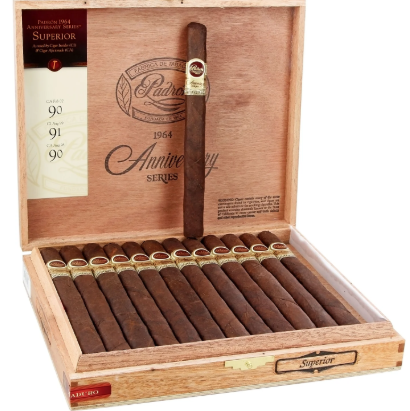
The 1964 Anniversary Series steps things up. These sit solidly in the full-strength category, with 57 medium-full offerings across the lineup. The tobacco is aged longer, the blends are more complex, and the smoking experience is correspondingly more intense. If you haven’t built up tolerance, don’t start here on an empty stomach — these are serious cigars.
The 1926 Serie is the pinnacle. Named for Jose Orlando Padron’s birth year, these are among the most acclaimed cigars in the world. They’re full to extra-full in strength, with tobacco aged significantly longer than even the 1964 line. Scores in the upper 90s from major publications aren’t unusual for this series. If you’re chasing the best the brand has to offer and you’ve got the palate for it, the 1926 is where you end up.
For those easing in, there are a handful of mild-medium offerings in the lineup — notably some Connecticut-wrapped vitolas that offer a genuinely different experience: creamier, lighter, with a softer nicotine impact. These are worth knowing about if you’re shopping for someone newer to cigars.
Wrappers and Flavor Profiles: Natural vs. Maduro
This is where a lot of cigar shopping decisions get made, and Padron makes it relatively straightforward. The two primary wrapper categories you’ll see are Natural and Maduro, and they produce meaningfully different flavor experiences.
Natural wrappers on Padrons are sun-grown Nicaraguan leaf. They tend to produce a flavor profile that’s earthier, slightly more peppery, and with a defined nuttiness. The burn is clean, the complexity builds across the thirds, and the finish often carries dried fruit and wood notes. If you enjoy a cigar that tastes like Nicaragua in the best possible sense — straightforward, bold, and earthy — the natural is your pick.
Maduro wrappers are fermented longer, which breaks down the sugars in the leaf and produces that deep, dark, sweet character Maduro fans love. Padron Maduros are particularly good — the extra fermentation softens the strength slightly while amplifying the cocoa and coffee notes that are already characteristic of the Nicaraguan filler blend. The result is a sweeter, rounder, more dessert-like smoke. Many people who try a Padron Maduro for the first time don’t go back to the natural.
There’s also a small selection of Habano and Connecticut wrappers in the lineup, which cater to different occasions and preferences. The Habano options add a spicy, oily complexity; the Connecticut-wrapped cigars shift the whole experience toward creamier, lighter territory.
Which Padron Should You Start With?
If you’re new to the brand, the Padron 2000 in Maduro is the classic entry point — widely available, reasonably priced, medium-full in strength, and a perfect showcase of what Nicaraguan tobacco tastes like when it’s handled properly. From there, working your way up to the 1964 Anniversary Series makes complete sense.
For a gift or a special occasion, the 1964 Anniversary Series Torpedo Maduro or the Monarca is a safe bet. These are recognizable, highly rated, and genuinely impressive smokes that any serious cigar lover will appreciate.
If you want to explore the full collection, CigarLane carries 94 Padron cigars across every major vitola and series, making it easy to compare options side by side.
FAQs About Padron Cigars
Are Padron cigars good for beginners?
The core Padron Series, especially in Connecticut or Natural wrapper in smaller sizes, can work for newer smokers. The 1964 and 1926 lines are better saved for when you’ve built some tolerance.
What’s the difference between Padron 1964 and 1926?
Primarily tobacco age and intensity. The 1926 Serie uses older, more developed tobacco and is generally fuller in strength and more complex in flavor. Both are premium lines, but the 1926 is the brand’s flagship.
Natural or Maduro — which is better?
Neither is objectively better. Natural wrappers offer earthier, spicier profiles; Maduro wrappers bring cocoa sweetness and a softer, rounder finish. Try both and decide based on what you enjoy.
How should I store Padron cigars?
In a humidor maintained at 65–70% relative humidity and 65–70°F. Padrons age beautifully, so buying a box and letting them rest for six to twelve months is never a bad idea.
Why are Padron cigars so consistently rated?
The family controls the entire process — seed strains, farming, aging, rolling, and quality control. That vertical integration eliminates variables and is the main reason their consistency is almost unmatched in the premium segment.
Final Thoughts
Choosing a Padron comes down to knowing where you are as a smoker and what you want from the experience. The lineup rewards exploration — there’s genuinely something for every skill level and occasion.
Start with the classics, pay attention to how the size and wrapper change the flavor, and don’t rush toward the strongest options until you’re ready. That’s how you get the most out of one of cigar-making’s greatest family legacies.
Leave a Reply