
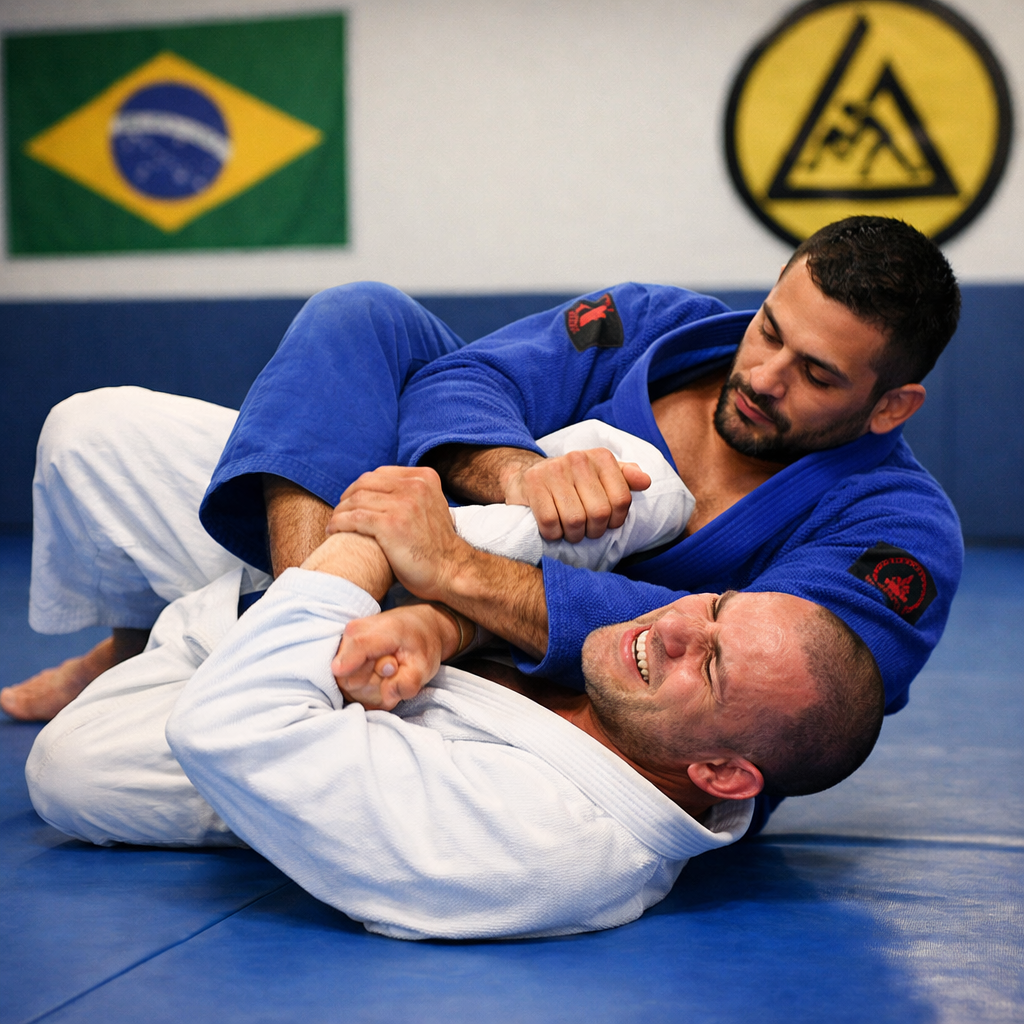
The first day you step onto a Brazilian Jiu Jitsu (BJJ) mat, you are likely feeling a mix of adrenaline and sheer confusion. You see people entangled in human puzzles, moving with a fluid grace that looks both impossible and exhausting. You hear terms like “guard,” “sweep,” and “submission” being thrown around like a foreign language. It is a daunting environment for any newcomer. However, surviving those first six months is not just about learning how to choke someone or escape a pin; it is about a fundamental shift in your ego, your physical capabilities, and your mental resilience.
Brazilian Jiu Jitsu is a martial art and combat sport based on grappling, ground fighting, and submission holds. It focuses on the skill of controlling one’s opponent through techniques that force them to submit. According to the technical definition provided by Wikipedia, BJJ revolves around the concept that a smaller, weaker person can successfully defend themselves against a bigger, stronger, heavier assailant by using proper technique and leverage. This philosophy makes it one of the most effective forms of self defense in the world.
To thrive in this environment, you must embrace the “white belt mentality.” This means accepting that you will be the least knowledgeable person in the room for a while. It means being okay with getting tapped out repeatedly. Most importantly, it means showing up consistently. If you are looking for a place to begin this journey, Piratebjj offers Jiu jitsu madison AL, providing a supportive environment for practitioners of all levels to hone their skills.
Phase 1: The First 30 Days – Survival and Basic Mechanics
The initial month of BJJ is often the most difficult. Your body is adapting to movements it has never performed before, such as shrimping, technical stand-ups, and bridging. You will likely feel sore in muscles you didn’t know existed. During this phase, your primary goal is not to “win” rounds, but to understand the basic geography of the human body on the ground.
Understanding the Hierarchy of Positions
In BJJ, there is a clear hierarchy of positions. Beginners often make the mistake of trying to “muscle” their way out of a bad spot without understanding where they are. You must learn the difference between being in “Guard” (where you have your legs between you and your opponent) and being “Mounted” (where your opponent is sitting on your chest).
Survival in the first month is predicated on three things:
- Breathing: New students often hold their breath when they are nervous or under pressure. This leads to rapid exhaustion. Focus on steady, rhythmic breathing even when someone is putting weight on you.
- Safety First: Learn when to “tap.” Tapping is the universal signal to stop the match. There is no shame in tapping; it is the mechanism that allows you to train safely for years without injury.
- Basic Escapes: Instead of focusing on flashy submissions, spend your first 30 days learning how to get back to your feet or back to a neutral position.
Building Your Physical Foundation
While BJJ is technical, having a baseline of functional fitness helps. According to insights from Forbes, BJJ is an incredible full body workout that improves cardiovascular health, flexibility, and core strength. However, do not wait until you are “in shape” to start. The best way to get in shape for Jiu Jitsu is by doing Jiu Jitsu. Your body will naturally adapt to the specific demands of the sport as you attend classes.
Phase 2: Months 2 to 4 – Building a Basic Vocabulary
By the second month, the initial shock has worn off. You recognize the warm-up drills and you might even know the names of a few techniques. This is the period where you start to build your “technical vocabulary.” You begin to understand that BJJ is like a game of physical chess. If your opponent moves their arm here, you should move your hip there.
The Importance of Fundamentals
It is easy to get distracted by “fancy” moves you see on social media, but the first six months should be dedicated entirely to the fundamentals. This includes:
- The Closed Guard: Learning how to use your legs to control an opponent’s posture.
- The Scissor Sweep: A fundamental move to flip an opponent over and take the top position.
- Basic Submissions: Understanding the mechanics of the Rear Naked Choke, the Armbar, and the Triangle Choke.
Mental Resilience and the Ego
This is often the stage where the “honeymoon phase” ends. You might feel frustrated because you are still struggling against students who started just a few months before you. It is crucial to remember that progress in BJJ is rarely linear. Some days you will feel like you are finally “getting it,” and the next day you might feel like you’ve forgotten everything.
Current trends in sports psychology, often highlighted in Google News, suggest that “growth mindset” is the biggest predictor of long term success in complex skills. Instead of asking “Why did I lose?”, ask “What technical error led to that position?”. By removing the ego from the equation, you turn every “loss” in the gym into a valuable lesson.
Phase 3: Months 5 and 6 – Connecting the Dots
As you approach the half-year mark, things start to click. You aren’t just performing isolated moves anymore; you are beginning to chain them together. You start to anticipate your opponent’s reactions. If they defend your sweep, you transition into a submission. This is the beginning of “flow.”
Refining Your Defensive Shell
By now, your defense should be significantly better than it was on day one. You are harder to submit, your “frames” are stronger, and you are starting to recognize attacks before they are fully locked in. A strong defense is the foundation of a great offense. When you know you can escape most bad positions, you feel more confident taking risks and trying new attacks.
Consistency and Community
The secret to surviving the first six months is simply not quitting. Many people start BJJ, but few make it to the blue belt level and beyond. The difference is consistency. Aim to train at least two to three times per week. This frequency is enough to retain information without burning out or overtaxing your body.
Furthermore, lean into the community. Your training partners are your greatest assets. They are the ones who will push you, technicality correct you, and encourage you after a hard session. The bonds formed on the mats are unique because they are forged through mutual struggle and respect.
Conclusion: The Journey Has Just Begun
Surviving your first six months of Brazilian Jiu Jitsu is a massive achievement. You have pushed through physical discomfort, mental frustration, and the bruising of your ego. You have transformed from someone who knew nothing about grappling into a practitioner with a solid foundation of self defense and movement.
Remember that the goal of BJJ is constant improvement, not perfection. Every time you step onto the mat, you are becoming a slightly better version of yourself. You are learning discipline, problem solving under pressure, and the value of hard work. Whether you are training for fitness, competition, or self defense, the lessons learned in these first six months will stay with you for a lifetime.
If you are ready to take the next step in your martial arts journey or if you are looking for a premier facility to start your training, Piratebjj offers Jiu jitsu madison AL. Our world class instructors and welcoming community are dedicated to helping you reach your goals, whether they are on the podium or simply in your personal health.
Leave a Reply