
Introduction
If you’ve ever stepped onto the court in the wrong pair of shoes, you already know how much it matters. Tennis shoes aren’t just athletic footwear with a different name slapped on the box — they’re purpose-built tools designed to handle lateral movement, quick pivots, sudden stops, and hours of repetitive footwork that would destroy a regular running shoe in weeks.
Whether you’re a seasoned club player grinding out matches three times a week or someone just getting serious about the sport, your footwear is one of the most important decisions you’ll make. At Ole Tennis, we carry a curated selection of men’s and women’s tennis shoes from the brands players actually trust — Wilson, Babolat, Asics, Nike, and Adidas — all at prices that don’t make you wince.
Why Your Court Shoes Are More Important Than You Think
A lot of players obsess over racquets and strings, which makes sense — but foot health and court performance start from the ground up. Tennis is a sport that demands explosive lateral movement. You’re not just running forward; you’re sliding, pushing off sideways, planting hard and reversing direction in a split second. That kind of movement puts real stress on your ankles, knees, and the outer edges of your feet.
Court shoes designed specifically for tennis are built with reinforced toe caps, durable outsoles matched to specific court surfaces, and midsole cushioning tuned for multi-directional impact. The outsole pattern on a hard court shoe is completely different from what you’d find on a clay or grass shoe — and using the wrong one isn’t just bad for performance, it can wear through the sole in a matter of weeks. Getting the right pair means knowing your surface and your game.
Men’s Tennis Shoes – Performance Across Every Style of Play
Men’s options at Ole Tennis span the full range of playing styles, from baseline grinders to aggressive serve-and-volley players.
Wilson men’s tennis shoes have built a strong reputation for durability and lateral support. Wilson’s court footwear tends to appeal to players who stay in the back of the court and rely on stability through long rallies. The outsoles are typically designed with reinforced zones around the toe and outer heel — the two areas that wear down fastest in most players. If you’ve burned through the toe of a shoe within a season, Wilson’s reinforced designs are worth a close look.
Babolat men’s tennis shoes take a slightly different approach, leaning into speed and a lower-to-the-ground feel. The Jet Mach series, for example, is built for players who like to move explosively and want a shoe that responds quickly. The Babolat Jet Mach 4, now available at Ole Tennis, offers an all-court outsole and a snappy feel underfoot that faster movers tend to appreciate. It’s not a heavy stability shoe — it’s built for players who want to feel quick.
Asics men’s tennis shoes bring the brand’s deep heritage in cushioning technology to the court. Asics’ GEL cushioning system has been a staple in athletic footwear for decades, and in their tennis line it’s positioned strategically in the heel and forefoot to absorb the kind of repeated impact that accumulates over a two-hour match. Players who have dealt with knee or joint soreness often find Asics shoes notably more comfortable over long sessions.
Nike men’s tennis shoes are recognizable on courts worldwide for a reason — the fit, the cushioning, and the aesthetic all click together in a way that’s hard to argue with. Nike’s tennis range runs from lightweight speed shoes to sturdier all-court options, and they’ve long been a favorite among competitive players who want footwear that performs without feeling like a chore to wear.
Adidas men’s tennis shoes round out the lineup with technology like the Adiwear outsole — one of the more durable sole compounds available in tennis footwear — and responsive cushioning that suits players who like a firm, energetic feel. Adidas has invested heavily in their tennis footwear over recent years, and it shows in the construction quality.
Women’s Tennis Shoes – Built for the Female Athlete’s Foot
Women’s tennis isn’t just a scaled-down version of the men’s game, and the best footwear brands know that. Women’s shoes are designed with anatomically appropriate fits — narrower heel cups, different arch positioning, and adjusted toe box dimensions — to support the specific mechanics of a female athlete’s foot.
Ole Tennis carries women’s tennis shoes from the same premium brands across the men’s range: Wilson, Babolat, Asics, Nike, and Adidas. The fit differences are real, and they matter. A shoe that’s built on a women’s last rather than a downsized men’s last will typically feel more natural, reduce the risk of blisters, and hold the midfoot more securely during lateral cuts.
Wilson women’s tennis shoes offer the same emphasis on stability and durability found in their men’s line, adapted for female foot geometry. For players who value support over speed — particularly those who play doubles and need confidence at the net — Wilson’s women’s options are consistently reliable.
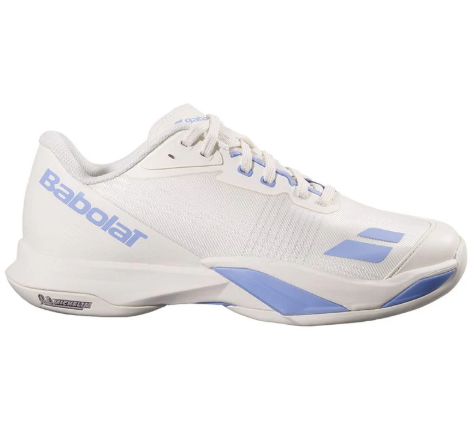
Babolat women’s shoes carry the same fast, lightweight philosophy into the women’s range. Clean lines, low profile, and a fit that doesn’t feel bulky. If your style of play involves a lot of movement and you want your feet to feel light, the Babolat women’s options are worth trying.
Asics women’s tennis shoes are a go-to for players who prioritize cushioning and long-match comfort. Asics’ cushioning tech doesn’t discriminate — the same quality that makes their men’s shoes comfortable translates directly to the women’s versions.
Nike women’s tennis shoes balance performance and aesthetics particularly well, which makes them popular both on the court and as training footwear. The fit tends to run a bit narrower through the midfoot, which many players find secure without being restrictive.
Adidas women’s tennis shoes are built for players who appreciate a firm, responsive platform. The outsole durability is a genuine selling point, especially for hard-court players who go through shoes quickly.
Choosing the Right Shoe for Your Court Surface
This part matters more than most recreational players realize. Court surfaces have a real impact on outsole wear and foot mechanics, and buying the wrong shoe for your primary surface is a waste of money.
Hard courts are the most abrasive surface — they eat outsoles alive. Look for a shoe with a durable, herringbone or modified herringbone outsole pattern that can handle the grinding friction of concrete or asphalt. Most of the shoes at Ole Tennis are designed with hard courts in mind, since that’s the surface the majority of recreational players use year-round.
Clay courts require a full herringbone outsole without the deep, sharp channels you’d see on a hard court shoe. Clay-specific outsoles are designed to grip without packing with clay, so you can push off cleanly.
Grass courts are a more specialized scenario — they need flat, pimpled outsoles that grip without tearing up the turf. If you’re playing Wimbledon-style grass courts regularly, look for grass-specific options.
What to Look for When Buying Tennis Shoes
Getting the right fit isn’t complicated, but there are a few things worth paying attention to before you click buy.
- Sizing tends to run slightly different across brands — Asics typically runs a half-size small, while Nike tends to run true to size. If you’re buying online, it’s worth checking the sizing notes for each shoe individually.
- Lateral support is non-negotiable. A shoe that feels fine when you’re walking around the store can feel completely unsupported once you’re pushing hard into a wide ball. Look for reinforced sidewalls and a stable heel cup.
- Weight matters to faster players. If you’re someone who relies on court coverage, a lighter shoe will help. If stability and durability are more important to your game, a slightly heavier, more structured shoe is worth it.
- And don’t ignore the break-in period. Most quality tennis shoes need two or three sessions before they feel completely comfortable. Don’t judge a shoe on the first hit.
Frequently Asked Questions
Can I use running shoes for tennis?
Running shoes aren’t designed for lateral movement and lack the side-wall reinforcement that tennis demands. Using them on court increases injury risk and they’ll wear out much faster than a proper court shoe.
How often should I replace my tennis shoes?
Most players replace their shoes every 45–60 hours of play, or when the outsole shows visible wear. Playing on hard courts burns through soles faster than clay.
Do the brands at Ole Tennis carry junior sizes?
Yes — Ole Tennis also carries junior tennis shoes for younger players.
Is free shipping available?
Ole Tennis offers free shipping on orders over $50, so a single pair of shoes typically qualifies.
How do I know which brand fits my foot type?
Asics tends to suit wider feet with more cushioning preference; Nike and Babolat suit narrower, medium-volume feet; Wilson and Adidas sit in the middle. When in doubt, the Ole Tennis team can help — reach them at 516-780-0940.
Conclusion
The right pair of court shoes protects your joints, improves your movement, and holds up through hundreds of hours of play. Whether you’re shopping for men’s or women’s styles, the lineup at Ole Tennis covers every playing style, surface, and budget — with trusted brands like Wilson, Babolat, Asics, Nike, and Adidas all under one roof.
Shop the full selection, take advantage of free shipping on orders over $50, and get on court with footwear that actually belongs there.
Leave a Reply