
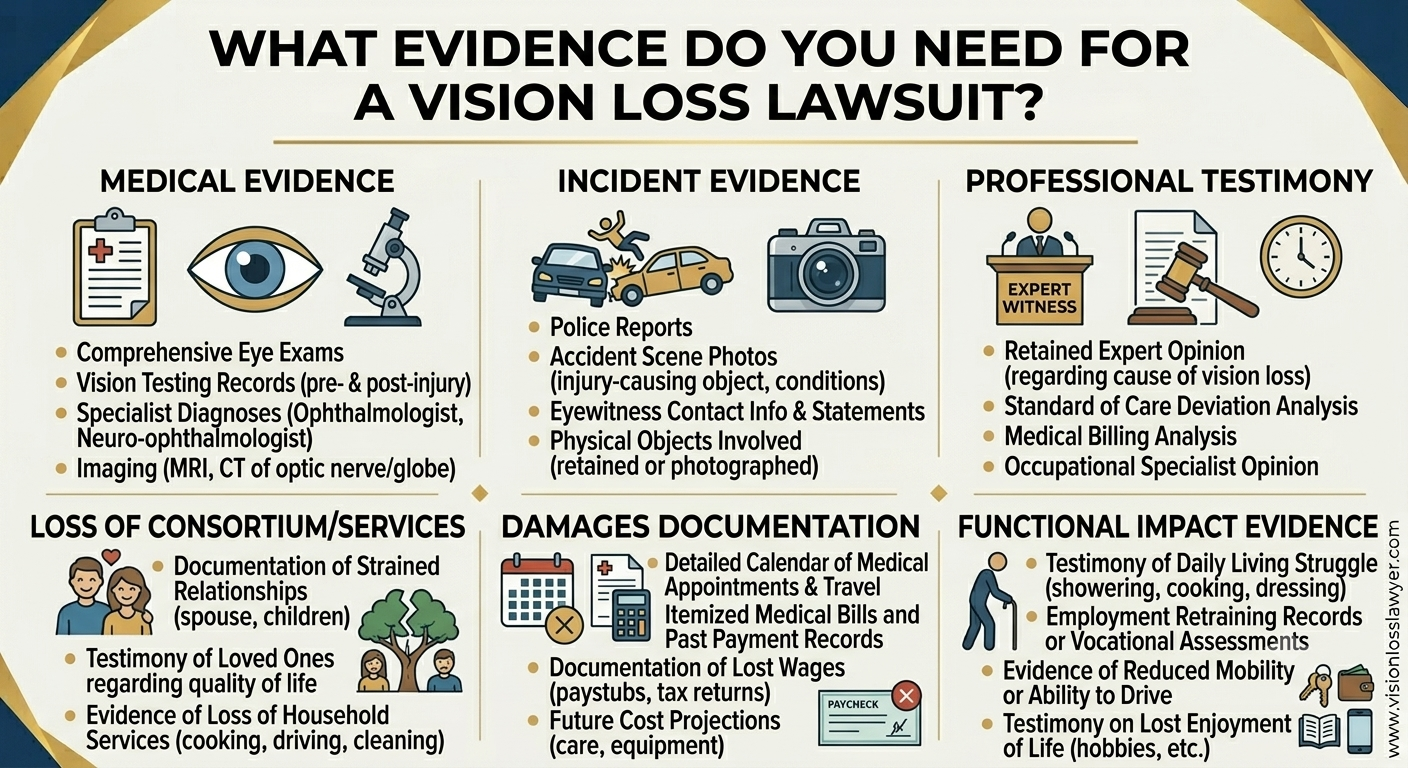
Vision loss can be one of the most devastating consequences of an accident, medical error, workplace incident, or defective product. When another party’s negligence causes partial or permanent blindness, victims may have the right to pursue compensation through a legal claim. However, proving a vision loss case requires strong and well-documented evidence. Resources available through experienced vision loss attorneys can help victims understand the legal process and the types of evidence needed to build a successful claim.
Whether the injury involves damage to the retina, optic nerve, cornea, or a traumatic brain injury affecting vision, evidence plays a critical role in establishing liability and demonstrating the full extent of the damages suffered.
Why Evidence Is Important in a Vision Loss Lawsuit
A vision loss lawsuit is more than simply proving that an injury occurred. The injured party must show that another person, company, healthcare provider, or organization was responsible for causing the injury.
Strong evidence helps establish:
- How the accident occurred
- Who was responsible
- The severity of the vision loss
- The impact on daily life
- Financial losses resulting from the injury
- Future medical and rehabilitation needs
Without sufficient evidence, insurance companies and defendants may dispute liability or minimize the value of the claim.
Medical Records: The Foundation of a Vision Loss Claim
Medical records are often the most important evidence in any vision loss lawsuit.
These records help document:
- The initial diagnosis
- The nature of the eye injury
- Treatment provided
- Surgical procedures
- Rehabilitation efforts
- Long-term prognosis
Medical documentation creates a timeline that links the accident or incident to the vision impairment.
Important Medical Documents
Victims should preserve:
- Emergency room records
- Ophthalmology reports
- Eye examination results
- Surgical records
- Imaging studies
- Prescription information
- Follow-up treatment records
Detailed medical records help demonstrate the seriousness and permanence of the injury.
Diagnostic Testing and Imaging Evidence
Vision loss cases often rely heavily on diagnostic testing to prove the extent of the injury.
Common diagnostic evidence may include:
Retinal Imaging
Retinal scans can reveal tears, detachments, hemorrhages, and other damage affecting vision.
Optical Coherence Tomography (OCT)
OCT scans provide detailed images of retinal structures and are frequently used to diagnose serious eye conditions.
Visual Field Testing
Visual field tests help measure blind spots and peripheral vision loss.
CT Scans and MRI Results
When traumatic brain injuries contribute to vision problems, CT scans and MRIs may provide critical evidence of neurological damage.
These objective findings often strengthen a victim’s case by clearly demonstrating physical injuries.
Expert Witness Testimony
Expert testimony is frequently necessary in vision loss litigation.
Experts help explain complex medical issues and connect the injury to the accident or negligent conduct.
Ophthalmologists
Eye specialists can explain:
- The nature of the injury
- The treatment required
- Whether vision loss is permanent
- Future medical needs
Neurologists
When vision impairment results from a traumatic brain injury, neurologists may explain how the brain damage affects visual function.
Vocational Experts
Vocational experts evaluate how vision loss impacts a person’s ability to work and earn a living.
Life Care Planners
Life care planners estimate future expenses related to medical treatment, rehabilitation, assistive technology, and long-term care.
Their testimony often plays a significant role in calculating damages.
Accident Reports and Incident Documentation
Official reports often provide valuable information regarding how the injury occurred.
Examples include:
Police Reports
For car accidents, truck accidents, and pedestrian collisions, police reports can help establish fault and document important details.
Workplace Incident Reports
Construction accidents, industrial injuries, and occupational eye injuries often generate internal reports that may support a claim.
Property Incident Reports
Slip and fall accidents or premises liability cases may involve reports prepared by property owners or managers.
These documents often serve as important evidence when determining liability.
Photographs and Video Evidence
Visual evidence can be highly persuasive in a vision loss lawsuit.
Important photographs may include:
- The accident scene
- Damaged vehicles
- Unsafe property conditions
- Defective products
- Physical injuries
- Medical treatment progress
Surveillance and Security Footage
Video recordings can provide objective evidence showing how an accident occurred and who may be responsible.
Security cameras, traffic cameras, dashcams, and workplace surveillance systems often capture critical details.
Witness Statements
Eyewitness testimony can help support a victim’s account of the incident.
Witnesses may provide information regarding:
- How the accident happened
- Hazardous conditions
- Negligent actions
- Immediate symptoms following the injury
Independent witnesses are often viewed as credible sources because they have no financial interest in the outcome of the case.
Evidence of Financial Losses
Vision loss frequently causes substantial economic damages.
Victims should preserve records related to:
Medical Expenses
Examples include:
- Hospital bills
- Surgical costs
- Rehabilitation expenses
- Prescription costs
- Assistive device purchases
Employment Records
Documentation may include:
- Pay stubs
- Tax returns
- Employment contracts
- Disability records
- Lost wage statements
These records help quantify the financial impact of the injury.
Evidence of Daily Life Challenges
Not all damages are financial. Vision loss often affects a person’s independence and quality of life.
Helpful evidence may include:
Personal Journals
Keeping a journal can document:
- Pain levels
- Emotional struggles
- Daily limitations
- Missed activities
Statements from Family Members
Family members may provide insight into how the injury has changed the victim’s life and daily routine.
Rehabilitation Records
Vision rehabilitation records often demonstrate the extent of functional limitations caused by the injury.
Proving Future Damages
One of the most important aspects of a vision loss lawsuit is demonstrating future losses.
Evidence may support claims for:
- Ongoing medical treatment
- Future surgeries
- Long-term rehabilitation
- Reduced earning capacity
- Assistive technology needs
- Permanent disability accommodations
Because vision loss often creates lifelong consequences, future damages can represent a significant portion of the overall claim value.
Why Early Evidence Collection Matters
Evidence can disappear quickly after an accident.
Witness memories may fade, surveillance footage may be deleted, and important documents may become difficult to obtain.
Taking action early helps preserve critical evidence and strengthens the foundation of a legal claim.
Prompt medical treatment is equally important because delays may allow insurance companies to argue that the injury was unrelated to the incident.
Conclusion
Building a successful vision loss lawsuit requires much more than proving an eye injury occurred. Victims must gather evidence that demonstrates liability, documents the severity of the vision impairment, and establishes the financial and personal consequences of the injury.
Medical records, diagnostic testing, expert testimony, accident reports, witness statements, photographs, and proof of economic losses all play vital roles in strengthening a claim. By preserving evidence and thoroughly documenting damages, individuals affected by vision loss can better position themselves to pursue the compensation needed to address the long-term impact of a life-changing injury.
Leave a Reply