
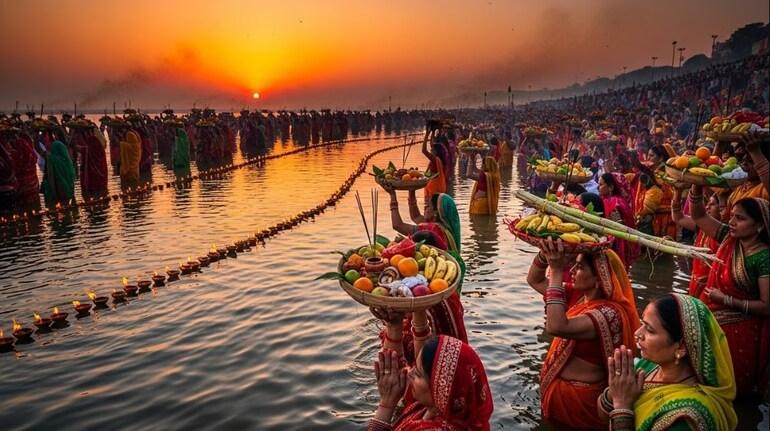
Chhath Puja is one of the most sacred Hindu festivals dedicated to Lord Surya (the Sun God) and Chhathi Maiya. Among its four important days, Nahay Khay marks the beginning of the festival and prepares devotees for the spiritual practices ahead. Nahay Khay in Chhath Puja 2026 is observed as the first day of the festival, when devotees take a holy bath, clean their homes and prepare a pure vegetarian meal.
This ritual represents physical cleanliness, mental purity and devotion. For families preparing for Chhath Puja, Sadhana celebrates the cultural and spiritual significance of these traditional practices and the importance of observing them with faith and dedication.
In this guide, you will learn what Nahay Khay means, when it will be observed in 2026, how the ritual is performed, what food is prepared and why this day holds special importance.
What Is Nahay Khay in Chhath Puja 2026?
Nahay Khay is the first day of Chhath Puja, during which devotees take a sacred bath, purify their surroundings and prepare a traditional vegetarian meal before beginning the strict fasting rituals.
The words Nahay Khay have two parts: “Nahay” means bathing, while “Khay” means eating. Together, they describe the practice of taking a holy bath and consuming a pure meal as the beginning of the Chhath observance.
During Chhath Puja 2026, Nahay Khay will mark the beginning of four days of devotion dedicated to the Sun God and Chhathi Maiya. Devotees, especially women observing the vrat, follow traditional rules of cleanliness, discipline and food preparation.
This day is important because it prepares devotees physically and spiritually for the upcoming rituals. It also brings families together to begin the festival with devotion and a sense of purity.
What Is the Difference Between Nahay Khay and Kharna?
Nahay Khay and Kharna are the first two days of Chhath Puja, but they involve different rituals and food practices.
Nahay Khay:
- It marks the first day of Chhath Puja.
- Devotees take a holy bath and clean their homes.
- A traditional, pure vegetarian meal is prepared.
- It establishes the discipline and purity required for the vrat.
Kharna:
- It is observed on the second day of Chhath Puja.
- Devotees observe a fast throughout the day.
- The fast is broken after sunset following the preparation and offering of prasad.
- Traditional offerings include jaggery kheer, chapatis and fruits.
Both rituals prepare devotees for the main Chhath offerings made to the setting and rising Sun.
Why Is Nahay Khay Important in Chhath Puja?
Nahay Khay is important because it establishes the spiritual foundation of the entire Chhath Puja celebration. It teaches devotees the importance of cleanliness, self-discipline, devotion and purity.
The main reasons behind observing Nahay Khay include:
- Physical purification: Devotees take a sacred bath to begin the festival with cleanliness.
- Mental preparation: The ritual encourages peace, concentration and devotion.
- Food purity: Special vegetarian food is prepared using traditional ingredients and clean cooking practices.
- Spiritual discipline: It prepares devotees for the strict fasting rituals that follow.
- Family participation: Family members come together to prepare food and organise the upcoming celebrations.
How Is Nahay Khay Performed During Chhath Puja 2026?
Nahay Khay is performed through a series of traditional practices involving bathing, cleaning, cooking and prayer. Devotees follow these rituals with sincerity and maintain cleanliness throughout the day.
The following steps explain how Nahay Khay is generally observed.
1. Taking a Holy Bath
The day begins with an early morning bath, preferably in a sacred river, pond or other clean water source. Many devotees visit rivers such as the Ganga to perform this ritual.
The holy bath symbolises the purification of the body and mind. Those who cannot visit a river usually take a bath at home while maintaining the same spirit of devotion.
2. Cleaning the House and Kitchen
After bathing, devotees clean their homes, particularly the kitchen and cooking area. Cleanliness is considered essential because the food prepared during Chhath Puja is offered as prasad.
The cooking space is kept separate from ordinary household activities, and special attention is given to maintaining hygiene.
3. Preparing Traditional Vegetarian Food
One of the most important parts of Nahay Khay is preparing a traditional vegetarian meal. The food is generally cooked using fresh ingredients, clean utensils and traditional methods.
Popular dishes include:
- Chana Dal: A traditional preparation of split Bengal gram.
- Lauki Ki Sabzi: Bottle gourd cooked with simple spices.
- Arwa Chawal: Unpolished or non-parboiled rice commonly used in traditional preparations.
- Seasonal Vegetables: Fresh vegetables prepared without onion and garlic, according to family traditions.
The meal is prepared with devotion and is consumed after offering it to the deity according to the family’s customs.
4. Offering Prayers to Lord Surya
Devotees offer prayers to Lord Surya and seek blessings for good health, happiness and prosperity. The prayers express gratitude for the sunlight and energy that sustain life.
Some families also worship Chhathi Maiya and pray for the well-being of their children and loved ones.
5. Eating the Nahay Khay Meal
After completing the rituals and offering the food, devotees consume the prepared meal.
The meal is traditionally simple, nutritious and sattvic. It marks the beginning of the disciplined food practices followed throughout Chhath Puja.
6. Preparing for the Next Day of Chhath Puja
After Nahay Khay, devotees begin preparing for Kharna, the second day of the festival. They arrange ingredients, fruits, utensils and other essentials required for the upcoming rituals.
Families also prepare for the main offerings and evening prayers that take place on the following days.
What Food Is Prepared on Nahay Khay?
Food preparation is an essential part of Nahay Khay. Devotees traditionally prepare a simple and pure vegetarian meal using fresh ingredients.
The most commonly prepared dishes include:
Lauki Ki Sabzi
Lauki ki sabzi is one of the most popular dishes associated with Nahay Khay. Bottle gourd is cooked using simple spices and traditional methods. It is valued for its light and wholesome nature.
Chana Dal
Chana dal is prepared as a traditional accompaniment to rice and lauki ki sabzi. It is cooked carefully using clean utensils and ingredients.
Arwa Chawal
Arwa chawal is commonly served during the Nahay Khay meal. It is prepared separately and eaten with dal and vegetable preparations.
Rules for Preparing Nahay Khay Food
Devotees generally follow these traditional food preparation practices:
- Use fresh and clean ingredients.
- Maintain cleanliness in the kitchen.
- Prepare food without onion and garlic.
- Avoid non-vegetarian food and alcohol.
- Use clean utensils reserved for festival preparations, where customary.
- Follow family and regional traditions regarding ingredients and cooking methods.
The exact menu may vary between families and regions, but purity and devotion remain central to the ritual.
What Are the Important Rules to Follow on Nahay Khay?
Nahay Khay is observed with specific customs that help devotees maintain the spiritual discipline of Chhath Puja.
The important practices include:
Maintain Cleanliness
Devotees should keep their homes, kitchens and surroundings clean. Personal hygiene and cleanliness are considered essential throughout the festival.
Follow a Sattvic Diet
Food is generally prepared without onion, garlic or non-vegetarian ingredients. Devotees follow simple dietary practices according to their family traditions.
Avoid Negative Thoughts
Chhath Puja is associated with devotion, patience and self-discipline. Devotees try to maintain a peaceful environment and avoid unnecessary arguments.
Prepare Ritual Items in Advance
Families arrange fruits, vegetables, bamboo baskets, traditional utensils and other puja essentials before the main rituals begin.
Respect Traditional Customs
Different regions and families may follow slightly different practices. Devotees generally follow the customs passed down through their families and local traditions.
How Does Nahay Khay Prepare Devotees for the Remaining Days of Chhath Puja?
Nahay Khay establishes the foundation for the next three days of Chhath Puja. Each day has its own spiritual significance and follows a particular set of rituals.
Day 1: Nahay Khay
Devotees take a holy bath, clean their homes and prepare a pure vegetarian meal. This day marks the beginning of the festival.
Day 2: Kharna
Devotees observe a day-long fast and break it after sunset by consuming traditional prasad, commonly including jaggery kheer and chapatis.
Day 3: Sandhya Arghya
On the third day, devotees gather near rivers, ponds or other water bodies to offer Arghya to the setting Sun. This is one of the most important rituals of Chhath Puja.
Day 4: Usha Arghya
On the final day, devotees offer prayers to the rising Sun. After completing the morning rituals, they conclude the fast according to their traditions.
What Is the Spiritual Significance of Nahay Khay?
The spiritual meaning of Nahay Khay goes beyond bathing and eating. It represents the beginning of a journey of devotion, self-control and gratitude.
Symbol of Purity
The holy bath represents the purification of the body and mind. Cleaning the home and preparing food carefully reflect the importance of purity in religious observances.
Expression of Gratitude to Nature
Chhath Puja honours the Sun as the source of energy and life. Nahay Khay begins this period of gratitude towards nature and the natural elements that support human life.
Beginning of Self-Discipline
The festival requires devotees to follow specific food practices, fasting rules and prayer routines. Nahay Khay prepares them mentally and spiritually for these commitments.
Strengthening Family and Cultural Traditions
Families participate together in cleaning, cooking and arranging puja materials. These activities help preserve traditional customs and strengthen cultural connections across generations.
How Can Sadhana Help You Celebrate Chhath Puja 2026?
Chhath Puja is a festival where devotion, tradition and preparation come together. From Nahay Khay to Usha Arghya, every ritual carries its own significance.
At Sadhana, we believe that celebrating festivals is also about staying connected with cultural values and traditional practices. Thoughtful preparation, understanding the rituals and following family customs can make the celebration more meaningful.
As you prepare for Chhath Puja 2026, take time to understand the significance of each day and arrange the necessary puja essentials in advance. Celebrate with faith, simplicity and respect for tradition.
Conclusion
Nahay Khay is the first and an essential day of Chhath Puja 2026. It marks the beginning of four days of devotion through a holy bath, household cleaning, sattvic food preparation and prayers to Lord Surya. The ritual reminds devotees that cleanliness, discipline and purity are important parts of spiritual practice.
Whether you are observing the vrat for the first time or continuing a family tradition, understanding Nahay Khay helps you celebrate Chhath Puja with greater devotion and awareness.
At Sadhana, we encourage everyone to honour these beautiful traditions and prepare for Chhath Puja 2026 with faith, positivity and devotion.
Frequently Asked Questions
1. What Is Nahay Khay in Chhath Puja 2026?
Nahay Khay is the first day of Chhath Puja. Devotees take a holy bath, clean their homes and prepare a traditional vegetarian meal. It marks the beginning of the four-day festival and prepares devotees for the upcoming fasting and worship rituals dedicated to Lord Surya and Chhathi Maiya.
2. Why Is Nahay Khay Celebrated?
Nahay Khay is celebrated to begin Chhath Puja with physical and spiritual purity. The holy bath, household cleaning and preparation of sattvic food represent cleanliness, discipline and devotion. It also prepares devotees for the strict fasting practices and important offerings performed during the remaining days of the festival.
3. What Food Is Eaten on Nahay Khay?
Devotees traditionally eat a simple vegetarian meal consisting of lauki ki sabzi, chana dal and arwa chawal. The food is prepared using fresh ingredients and clean utensils, generally without onion and garlic. Specific recipes may differ according to regional and family traditions.
4. How Does Sadhana Help With Chhath Puja Celebrations?
Sadhana celebrates the cultural and spiritual values associated with Indian festivals. Through its festival-related content and traditional guidance, Sadhana helps readers understand the importance of rituals such as Nahay Khay and encourages thoughtful preparation for Chhath Puja.
5. How Many Days Does Chhath Puja Last?
Chhath Puja is traditionally observed over four days. The festival begins with Nahay Khay, followed by Kharna on the second day, Sandhya Arghya on the third day and Usha Arghya on the fourth day. Each day has a distinct ritual and spiritual significance.
About the Author
Sadhana Editorial Team creates informative content about Indian festivals, traditional practices, cultural celebrations and devotional observances. The team aims to help readers understand the meaning and importance of India’s rich cultural heritage through clear and accessible articles.
Leave a Reply