
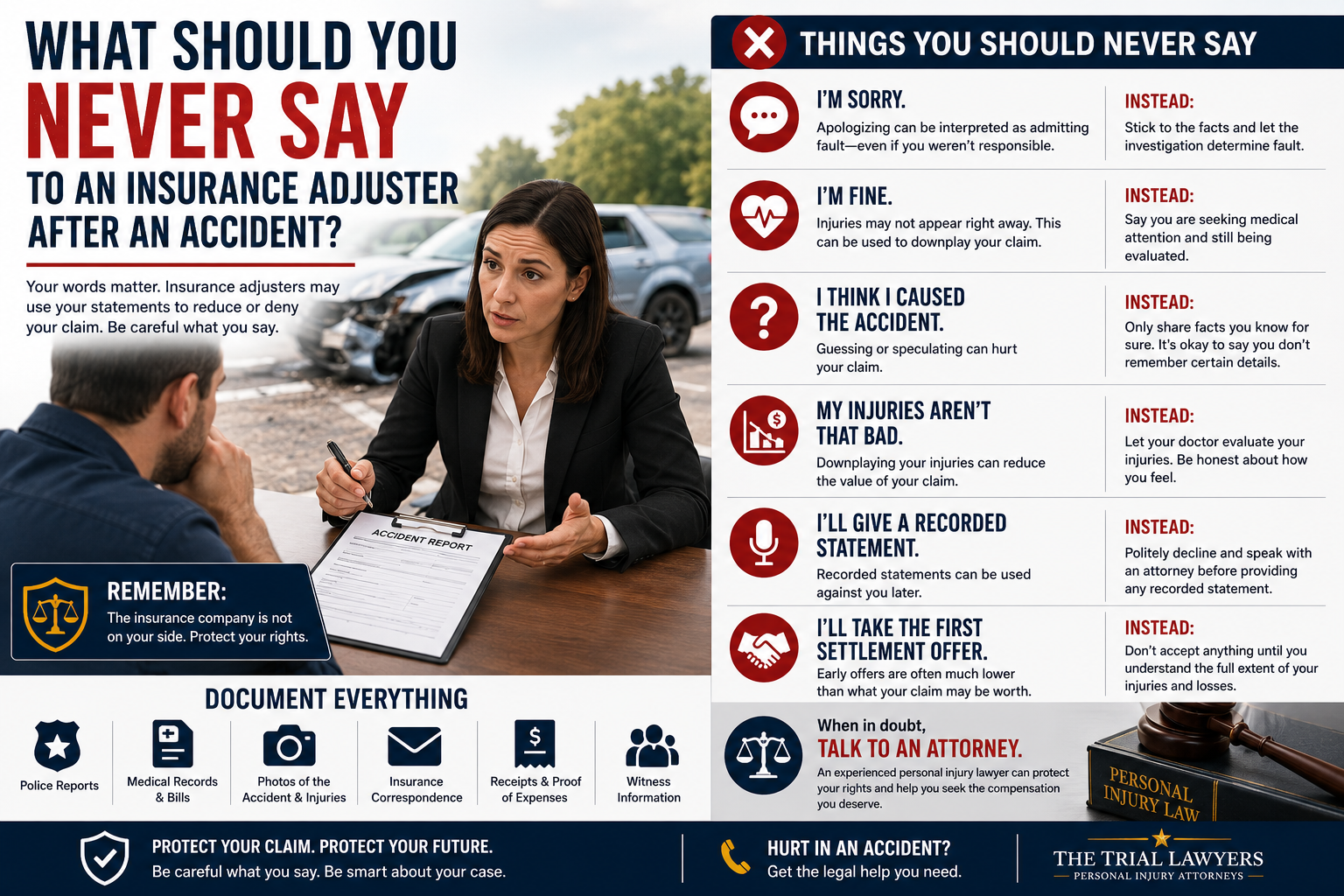
After an accident, it’s common to receive a call from an insurance adjuster within days—or even hours. While the conversation may seem routine, what you say during that call can affect your personal injury claim. Insurance adjusters are responsible for evaluating claims, but their questions are often designed to gather information that may influence the outcome of your case. Before discussing the details of your accident, it’s wise to understand your rights. Speaking with an experienced Texas personal injury lawyer can help you avoid common mistakes and protect your interests throughout the claims process.
Why Insurance Adjusters Contact You So Quickly
Insurance companies often begin their investigations immediately after an accident. An adjuster may contact you to:
- Confirm basic facts about the accident
- Ask about your injuries
- Discuss vehicle damage
- Request a recorded statement
- Offer an early settlement
While some of these questions may appear harmless, providing incomplete or inaccurate information can unintentionally weaken your claim.
Never Admit Fault
One of the most important things to avoid is admitting fault for the accident.
Even saying something like:
- “I’m sorry.”
- “I should have been paying more attention.”
- “I didn’t see the other vehicle.”
could later be interpreted as accepting responsibility.
Liability is determined through an investigation that considers police reports, witness statements, accident reconstruction, and other evidence. Avoid making assumptions about who caused the accident.
Don’t Say You’re “Fine”
Immediately after an accident, many people respond with:
- “I’m okay.”
- “I’m feeling fine.”
- “I’m not hurt.”
However, some injuries—including whiplash, soft tissue injuries, and concussions—may not produce symptoms right away.
If you later discover more serious injuries, the insurance company may point to your earlier statements to question the severity of your claim.
Instead, explain that you are still being evaluated or receiving medical care if that is the case.
Avoid Guessing About the Accident
If you’re unsure about a detail, don’t speculate.
Avoid statements such as:
- “I think I was going about 45 miles per hour.”
- “Maybe I changed lanes too quickly.”
- “I’m not exactly sure what happened.”
Guessing can create inconsistencies that may later be used during settlement negotiations or litigation.
Stick to facts that you know are accurate.
Don’t Minimize Your Injuries
Many accident victims try to be polite or optimistic.
Statements like:
- “It’s just a sore neck.”
- “It’s probably nothing.”
- “I’ll be back to work tomorrow.”
may seem harmless but can affect how your injuries are evaluated.
Some injuries worsen over time, making continued medical treatment necessary.
Allow your healthcare providers—not the insurance company—to determine the extent of your injuries.
Be Careful About Recorded Statements
Insurance adjusters sometimes ask for a recorded statement shortly after the accident.
Although every situation is different, you should understand why the statement is being requested before agreeing.
Recorded statements may later be reviewed to identify inconsistencies or statements that could reduce the value of your claim.
If you’re unsure how to respond, consider seeking legal guidance before providing a recorded interview.
Don’t Accept the First Settlement Offer Too Quickly
In some cases, an insurance company may offer a settlement before the full extent of your injuries is known.
Accepting an early settlement could mean:
- Future medical expenses aren’t covered.
- Additional treatment isn’t considered.
- Lost future income isn’t included.
- Long-term pain and suffering aren’t fully evaluated.
Once a settlement agreement is signed, you may give up the right to pursue additional compensation related to the accident.
Avoid Sharing Unnecessary Details
Answer only the questions necessary to process your claim.
Avoid volunteering information about:
- Previous injuries unless directly relevant
- Personal financial matters
- Speculation about fault
- Opinions about the accident
- Social media activity
Providing more information than necessary may complicate your claim.
Keep Detailed Records
Good documentation can strengthen your personal injury claim.
Keep copies of:
- Police reports
- Medical records
- Medical bills
- Prescription receipts
- Insurance correspondence
- Repair estimates
- Photographs of the accident
- Witness contact information
Well-organized records help support your version of events and demonstrate the damages you’ve suffered.
Continue Following Your Medical Treatment
Consistent medical care not only supports your recovery but also creates important documentation for your claim.
Attend scheduled appointments and follow your healthcare provider’s recommendations.
Missed appointments or gaps in treatment may allow the insurance company to argue that your injuries were not as serious as claimed.
Why Legal Guidance Can Make a Difference
Personal injury claims often involve more than simply reporting an accident.
A thorough investigation may include reviewing:
- Police reports
- Medical documentation
- Witness statements
- Accident scene evidence
- Property damage
- Insurance policies
An experienced trial attorney can also communicate with insurance companies, preserve evidence, and help ensure that your legal rights remain protected throughout the claims process.
Common Mistakes to Avoid
After an accident, try to avoid these common errors:
- Admitting fault
- Guessing about what happened
- Saying you’re uninjured before medical evaluation
- Accepting a quick settlement
- Providing unnecessary information
- Ignoring medical treatment
- Failing to keep documentation
Taking a careful and informed approach can help protect your claim.
Final Thoughts
Knowing what should you never say to an insurance adjuster after an accident can help you avoid mistakes that may affect your personal injury claim. Insurance companies conduct their own investigations, and the information you provide can influence how your case is evaluated.
By sticking to the facts, preserving important evidence, following your medical treatment, and understanding your legal rights, you place yourself in a stronger position throughout the claims process. If you’ve been injured because of someone else’s negligence, consulting with an experienced personal injury attorney early can help you navigate communications with insurance companies while protecting your opportunity to pursue fair compensation.
Leave a Reply