
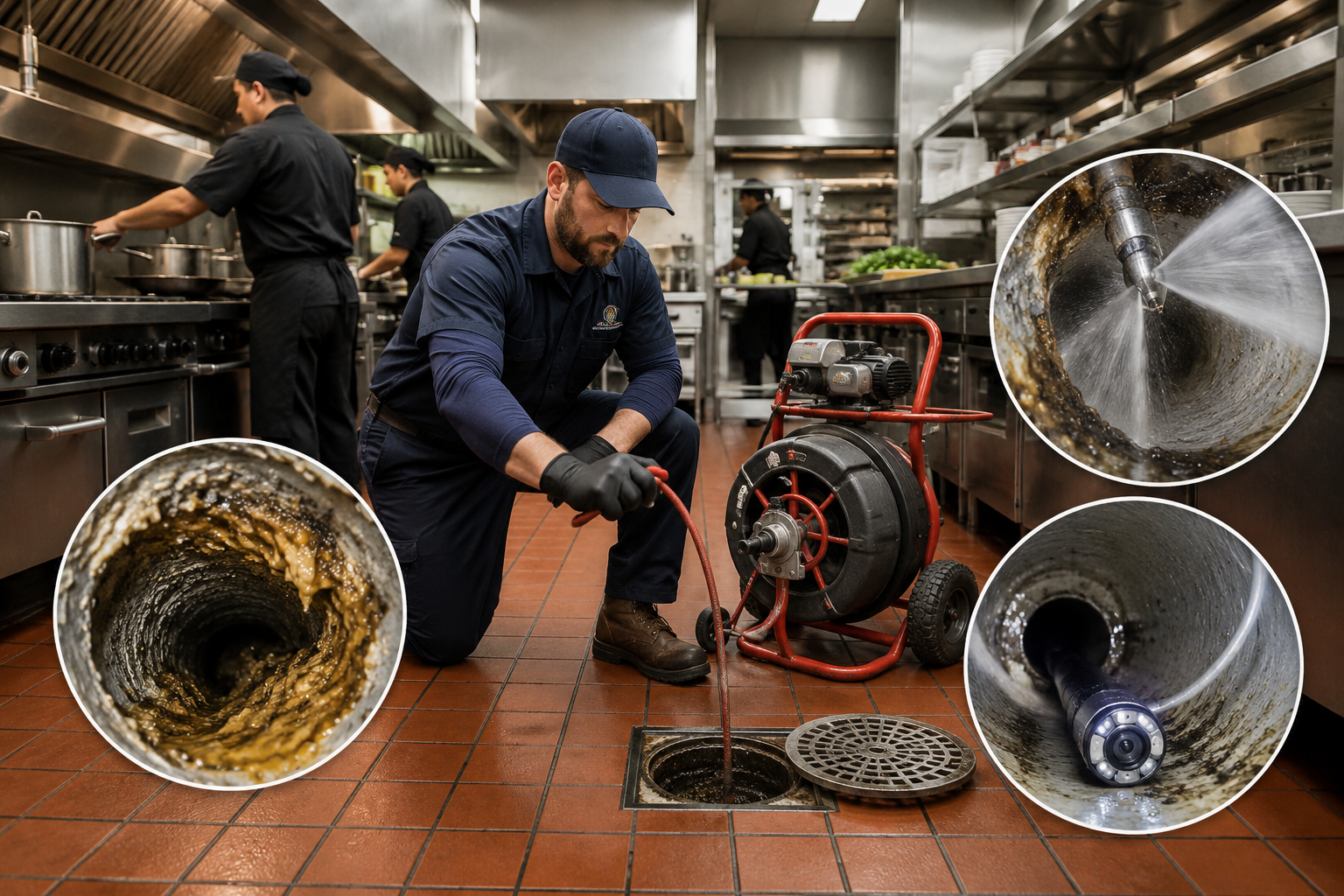
Restaurants rely on properly functioning plumbing systems every day. From food preparation and dishwashing to restroom facilities and floor drains, nearly every aspect of restaurant operations depends on efficient water flow and drainage. Unlike residential plumbing systems, commercial kitchens generate large amounts of grease, food waste, soap residue, and wastewater that place constant stress on drain lines.
Without a proactive maintenance strategy, these materials can accumulate inside pipes, leading to slow drains, sewer backups, unpleasant odors, and unexpected plumbing emergencies. That’s why successful restaurants invest in aggressive drain maintenance programs to keep their plumbing systems operating efficiently year-round. Professional commercial drain cleaning services can help restaurants prevent costly disruptions before they impact daily operations.
Why Restaurant Drains Face Unique Challenges
Restaurant plumbing systems handle significantly more waste than most residential properties.
Every day, commercial kitchens produce:
- Grease and cooking oils
- Food scraps
- Soap residue
- Detergents
- Organic waste
- Starches and sugars
Even when employees follow proper disposal procedures, small amounts of these materials inevitably enter the drainage system. Over time, they accumulate along pipe walls and restrict wastewater flow.
The result is a gradual buildup that increases the risk of clogs and sewer line issues.
The Impact of Grease on Commercial Plumbing
One of the biggest threats to restaurant drain systems is grease.
How Grease Causes Blockages
When hot grease enters a drain, it initially appears harmless because it flows as a liquid. However, as it cools, it solidifies and sticks to the inside of pipes.
Over time, grease combines with food particles and debris, creating thick blockages that narrow the pipe diameter.
Eventually, wastewater can no longer flow properly, resulting in slow drains and backups.
Grease Trap Limitations
While grease traps play an important role in capturing fats, oils, and grease (FOG), they are not foolproof.
Without regular cleaning and maintenance, grease traps themselves can become overloaded and ineffective, allowing grease to enter the drainage system.
Common Plumbing Problems Restaurants Experience
Restaurants that neglect drain maintenance often encounter recurring plumbing issues.
Frequent Drain Clogs
Kitchen sinks, floor drains, and prep area drains are particularly vulnerable to blockages caused by grease and food debris.
Slow Draining Fixtures
When buildup begins restricting flow, sinks and floor drains may take longer to empty.
Although this may seem minor initially, it often indicates a larger problem developing inside the drain line.
Sewer Backups
A blocked sewer line can force wastewater back into the building.
Sewer backups can disrupt operations, damage property, and create serious health hazards.
Unpleasant Odors
Accumulated organic waste inside pipes can produce foul odors that affect dining areas, kitchens, and restrooms.
Emergency Plumbing Repairs
Ignoring maintenance often results in emergency service calls that are significantly more expensive than routine preventive care.
How Drain Problems Affect Restaurant Operations
Drain issues impact more than just plumbing performance.
Health Code Violations
Standing water, foul odors, and sewage backups can create sanitation concerns that attract the attention of health inspectors.
Repeated violations may lead to fines or operational restrictions.
Customer Experience
No customer wants to dine in a restaurant with unpleasant odors or restroom plumbing problems.
Plumbing issues can negatively affect customer satisfaction and online reviews.
Employee Productivity
When sinks, dishwashing stations, or floor drains become unusable, kitchen operations slow down significantly.
This can reduce efficiency during busy service periods.
Revenue Loss
Unexpected plumbing emergencies often require temporary closures, resulting in lost revenue and frustrated customers.
What an Aggressive Drain Maintenance Program Includes
A comprehensive drain maintenance plan focuses on prevention rather than reaction.
Scheduled Drain Cleaning
Routine drain cleaning removes grease, debris, and buildup before major blockages develop.
Regular service intervals depend on restaurant size, menu offerings, and daily wastewater volume.
Hydro Jetting Services
Hydro jetting uses high-pressure water to clean the interior of drain and sewer pipes.
Unlike basic snaking methods, hydro jetting removes grease, sludge, food residue, and other buildup throughout the entire pipe diameter.
This helps restore optimal flow and reduce future blockage risks.
Grease Trap Maintenance
Regular grease trap inspections and cleanings help prevent excessive grease from entering the plumbing system.
A properly maintained grease trap is one of the most important components of restaurant drain protection.
Sewer Line Inspections
Video camera inspections allow plumbers to identify developing issues before they become major problems.
These inspections can reveal:
- Grease accumulation
- Pipe deterioration
- Root intrusion
- Structural damage
- Developing blockages
Preventive Plumbing Assessments
Routine inspections help identify worn plumbing components, damaged drain lines, and areas requiring attention.
Benefits of Preventive Drain Maintenance
Restaurants that implement aggressive maintenance programs enjoy several important advantages.
Reduced Emergency Repairs
Routine maintenance helps identify and resolve small issues before they become major plumbing failures.
Improved Drain Performance
Clean pipes allow wastewater to flow efficiently throughout the facility.
Longer Plumbing System Lifespan
Removing buildup reduces stress on drain lines and sewer infrastructure.
Better Compliance
Regular maintenance helps support sanitation standards and regulatory compliance.
Lower Long-Term Costs
Preventive service is typically far less expensive than emergency repairs, property damage restoration, or business interruptions.
How Often Should Restaurant Drains Be Cleaned?
The ideal maintenance schedule depends on several factors.
These include:
- Restaurant size
- Daily customer volume
- Type of cuisine
- Grease production levels
- Age of plumbing infrastructure
Many busy restaurants benefit from professional drain cleaning every few months, while others may require more frequent service.
A commercial plumbing professional can recommend an appropriate maintenance schedule based on operational needs.
Warning Signs Your Restaurant Needs Immediate Drain Service
Even with a maintenance plan, restaurant managers should watch for signs of developing problems.
Multiple Slow Drains
When several drains begin slowing down simultaneously, a larger blockage may be forming.
Recurring Clogs
Frequent clogs often indicate substantial buildup inside drain lines.
Gurgling Sounds
Air trapped by partial blockages can create unusual noises within the plumbing system.
Persistent Odors
Foul smells may signal organic buildup or sewer line issues.
Water Backups
Any wastewater backup requires immediate professional attention.
Final Thoughts
Restaurant plumbing systems endure heavy daily use and face constant exposure to grease, food particles, and wastewater. Without an aggressive drain maintenance program, even a well-managed restaurant can experience clogs, sewer backups, unpleasant odors, and costly operational disruptions.
Regular drain cleaning, hydro jetting, grease trap maintenance, and sewer inspections help prevent emergencies while protecting customer experience, employee productivity, and business profitability. By investing in preventive plumbing maintenance, restaurant owners can reduce long-term costs, improve operational efficiency, and keep their kitchens running smoothly year-round.
Leave a Reply